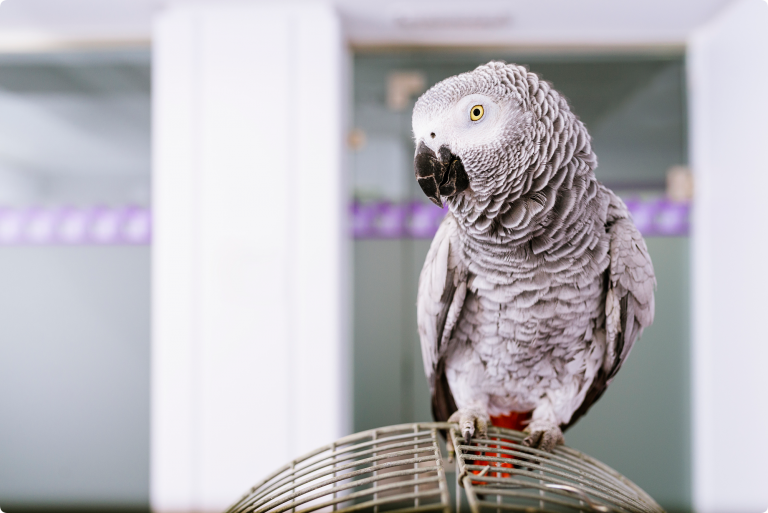
Parrots are highly intelligent and long lived birds. Small parrots, like budgerigars and cockatiels make excellent pets. Larger birds can be incredibly demanding and this should be seriously considered before making a commitment.
There are many birds looking for a home, so consider adopting your new pet from a rescue organisation. Some birds also require a licence to keep.
There are many diseases birds can carry without symptoms and it is strongly recommended that all new birds receive a health examination by an avian veterinarian. If you have existing birds, a quarantine period of at least 6 weeks is also recommended
Zoonotic Diseases
Birds are capable of carrying infections that people can contract.
These infections are usually rare but can be very serious in people with compromised immune systems (e.g. HIV/AIDS, chemotherapy or transplant patients, young children, the elderly).
It is recommended that parrots are tested for Psittacosis (bird chlamydia), a common infection that can be easily treated.
Other infections include Salmonella, Campylobacter and E.coli.
Please discuss any concern with your avian veterinarian and health care practitioner.
Housing Your Bird
Parrots are very curious and like to chew! The safest metal for parrot cages and toys is stainless steel. Cages can also be made from pressed metal or be powder coated. Rusty metal, lead, zinc, nickel, copper and many other metals are highly toxic to parrots.
Perches should ideally be native, non-toxic branches of various widths. Dowel, rope and sandpaper perches are not recommended.
Newspaper or other papers are ideal substrates. Shell grit, sand, mulch and potting soils are not recommended to be used on the floor of the enclosure as they can be a source of bacteria and fungal infections or they easily become contaminated.
Hygiene of the enclosure, perches, toys, and food and water containers is vital to ensure your bird remains healthy. It is recommended that water and detergent are used to keep their environment clean.
Nutrition
A good quality pellet should form the base of your bird’s diet.
The remainder of the diet should consist of vegetables, seeds, nuts, grasses, native browse and some fruits. Lorikeets should be offered a base of dry powder diet supplemented with wet powder diets, vegetables, fruits and native browse (especially flowers).
Chickens should be fed a pellet diet with vegetables, insects and offered grains only as treats.
Bird Behaviour
Our relationship with birds needs to be based on positive experiences and trust.
Punishment methods must be avoided when interacting with your bird. Problem behaviours (such as biting or screaming) can be prevented with careful selection of the right bird species for you, establishing a routine and teaching your bird skills to cope with being left alone for periods of time.
Providing them with food that encourages foraging behaviours is one way to do this.Inappropriate bonding and reproductive behaviours should be discouraged. It is recommended that any concerns with your birds behaviour are immediately discussed with your avian veterinarian before they escalate.
Hazards In The Home
Toxic food – avocado, onion, garlic, coffee, chocolate, rhubarb
Toxic house plants – including azaleas, ficus species, oleander
Poisons – rodent baits, cockroach or ant baits, snail bait
Inhaled toxins – Teflon coated cookware, cigarette smoke, insect sprays
Fabrics – cotton bird toys, rope perches, carpet, clothing
Metal items – lead paint, galvanised wire, copper, rusty steel, coins, batteries, costume jewellery Ceiling fans, windows, pet cats and dogs, wild birds, rodents